


1. INTRODUCTION
2. GLOBAL TRENDS IN COMMERCIAL GROUND STATION SERVICES AND TECHNOLOGIES
2.1. Domestic and International Ground Station Operation System and Infrastructure
2.2. NASA NSN Ground Station Facilities
2.3. European ESA ESTRACK Ground Station Network
2.4. Japan JAXA Ground Station Network
2.5. South Korea KARI Ground Station Network
2.6. Domestic and International Commercial Ground Station Networks
3. COMMERCIAL GROUND STATION UTILIZATION STRATEGY
3.1. Comparison of Domestic and International Commercial Ground Station Service Providers
3.2. Operational Efficiency of Domestic and International Commercial Ground Stations
4. Space Security Measures for Utilizing Commercial Ground Stations
4.1. The Necessity of Establishing Cybersecurity Measures for Space Systems
4.2. Trends in Satellite-Ground Station Data and Network Security Technologies
4.3. Security Countermeasures for Utilizing Commercial Ground Stations in Domestic Security Satellite Operations
5. CONCLUSION
1. INTRODUCTION
With the emergence of the Fourth Industrial Revolution and continuous advancements in space science and technology, the New Space era is rapidly progressing. This era is characterized by the active participation of private companies and national space agencies in space technology development. A notable example is SpaceX, a leading aerospace company in the United States, which has introduced the "Starlink" project; a low Earth orbit (LEO) satellite communication network. By approximately 2030, SpaceX plans to deploy 12,000 first-generation satellites and an additional 30,000 second-generation satellites to provide global high-speed internet services with speeds of up to 1 Gbps.
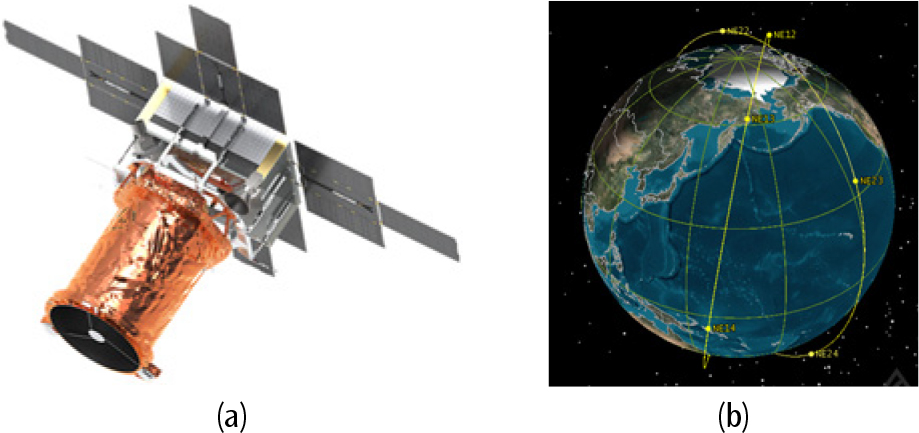
Recently, South Korea has been deploying nanosatellite constellations, each weighing less than 100 kg. These constellations offer significant advantages, including reduced weight, low power consumption, and cost efficiency, by utilizing multiple nanosatellites to perform the same mission. In April 2024, South Korea successfully launched NeonSat-1 (Fig. 1(a)) and plans to expand the constellation to a total of 11 satellites by 2027. The NeonSat constellation is equipped with 1-meter-resolution optical cameras and is designed for continuous imaging of the Korean Peninsula, disaster monitoring, and international imaging missions. Fig. 1(b) illustrates the operational orbit of the NeonSat constellation [1].
Although South Korea possesses advanced space technology, its space industry remains relatively small compared to leading spacefaring nations such as the United States. However, domestic companies are actively entering the space internet sector through low Earth orbit (LEO) satellite communications. Initially focusing on military communication networks, these companies plan to expand their services to include satellite internet for ships, aircraft, and urban air mobility. As part of its long-term vision to establish itself as a leading space economy by 2045, South Korea aims to increase its space development budget to over 1.5 trillion KRW by 2027.
To achieve the goal of becoming a leading space economy and to develop the domestic space industry into a key export sector with maximum economic impact, coordinated efforts from the government and research institutions are essential to establish foundational infrastructure. In particular, there is an urgent need to assess the current state of domestic and international commercial ground station services, optimize their utilization, and implement security measures from a space security perspective.
The operation of multiple low Earth orbit (LEO) satellite constellations requires ground stations and service technologies specifically optimized for satellite communications, as well as data and network security technologies to ensure secure and reliable satellite communication services that uphold national space security.
The recent Russia-Ukraine war has underscored the growing strategic importance of space warfare, highlighting the critical role of space security amid advancements in space technology and the accelerating trends of space militarization and exploration. In particular, with the global expansion of LEO satellite internet services, such as Starlink, there is an increasing need for comprehensive strategies to mitigate and counter emerging threats, including GPS jamming and cyberattacks targeting satellite communications.
This study examines the operation systems and infrastructure development of ground stations in both domestic and leading spacefaring nations. Specifically, it analyzes the service technology trends of commercial ground station providers, including KSAT, SSC, and CONTEC, and proposes strategies for domestic and international ground station utilization in satellite operations. Additionally, to establish space security measures for commercial ground station usage, this study investigates international cybersecurity incidents and related technological trends, identifying critical security elements associated with ground station services. Based on these findings, strategic measures are formulated to enhance the efficiency and security of satellite operations.
2. GLOBAL TRENDS IN COMMERCIAL GROUND STATION SERVICES AND TECHNOLOGIES
2.1. Domestic and International Ground Station Operation System and Infrastructure
Since the Space Race of the 1950s, driven by the United States and the Soviet Union, global interest in space exploration has continued to grow. Space agencies such as NASA (United States), ESA (European Space Agency), and JAXA (Japan Aerospace Exploration Agency) have undertaken missions for both practical applications including satellite communications, Earth observation, and meteorology and scientific research, such as studying the solar system's formation and predicting space environment changes.
To support these activities, major space agencies have developed specialized infrastructure for both Earth-orbiting satellites and deep-space missions, including ground station networks designed to meet mission-specific requirements. These ground stations play a critical role in enabling satellite telemetry, tracking, and command (TT&C), as well as data downlink and relay operations. Table 1 presents an overview of the key satellite missions operated by international space agencies and the ground station networks supporting them.
TABLE 1.
Current Status of Ground Station Infrastructure Development Domestically and Internationally
2.2. NASA NSN Ground Station Facilities
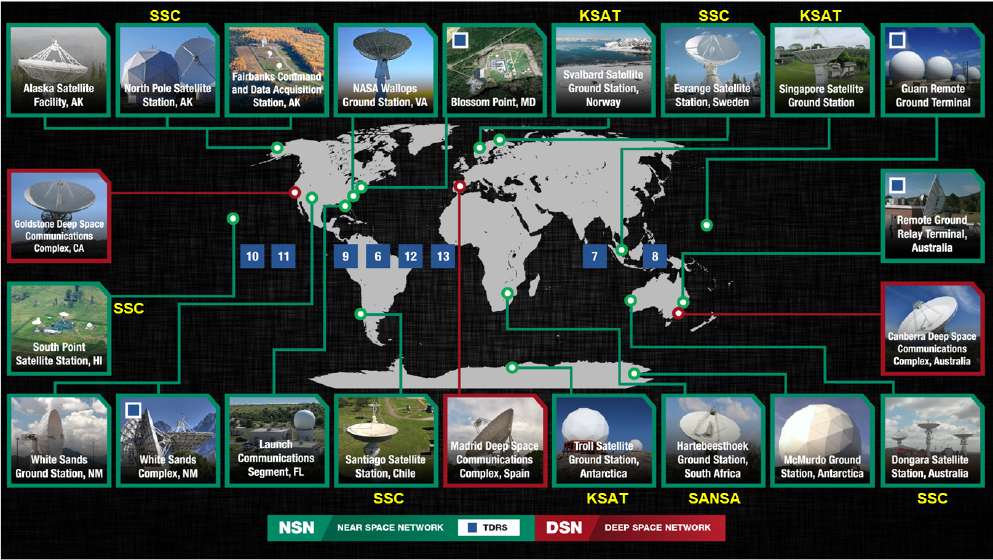
The NASA Near Space Network (NSN) ground stations support satellite communication services through a combination of NASA-operated infrastructure and commercial ground station providers, including SSC (Swedish Space Corporation), KSAT (Kongsberg Satellite Services), and SANSA (South African National Space Agency).
SSC operates ground stations in Alaska (United States), Esrange (Sweden), Santiago (Chile), and Dongara (Australia). KSAT manages the Svalbard ground station (Norway) and Trollsat (Antarctica), both of which provide polar orbit satellite communication services. Fig. 2 illustrates the geographical distribution and operational status of these facilities [2].
2.3. European ESA ESTRACK Ground Station Network
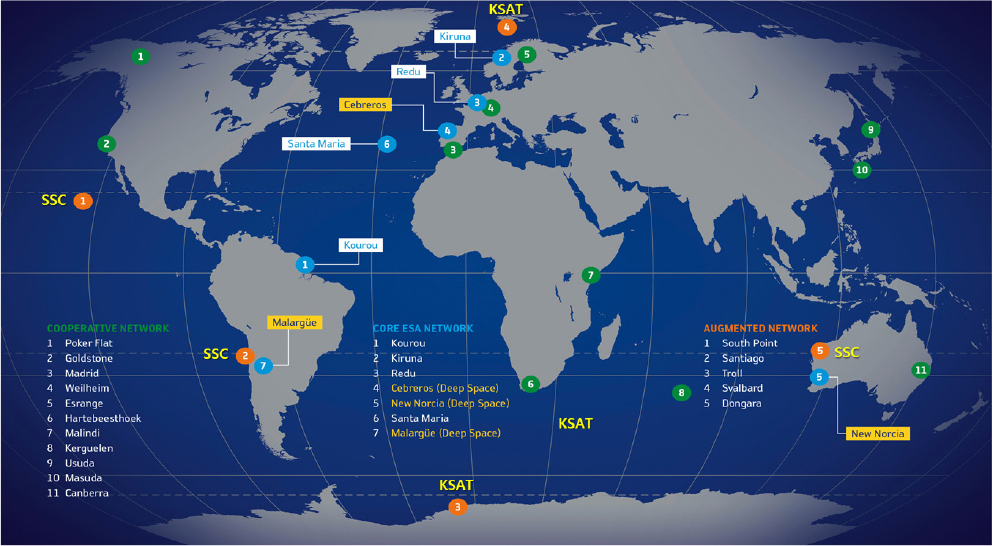
The European Space Agency (ESA) operates the ESTRACK (European Space Tracking) ground station network, which consists of a Core Network and an Augmented Network. The Core Network includes seven primary ground stations, four of which are dedicated to tracking near-Earth satellites and launch vehicles. Fig. 3 presents the locations and infrastructure of these ground stations [3].
2.4. Japan JAXA Ground Station Network
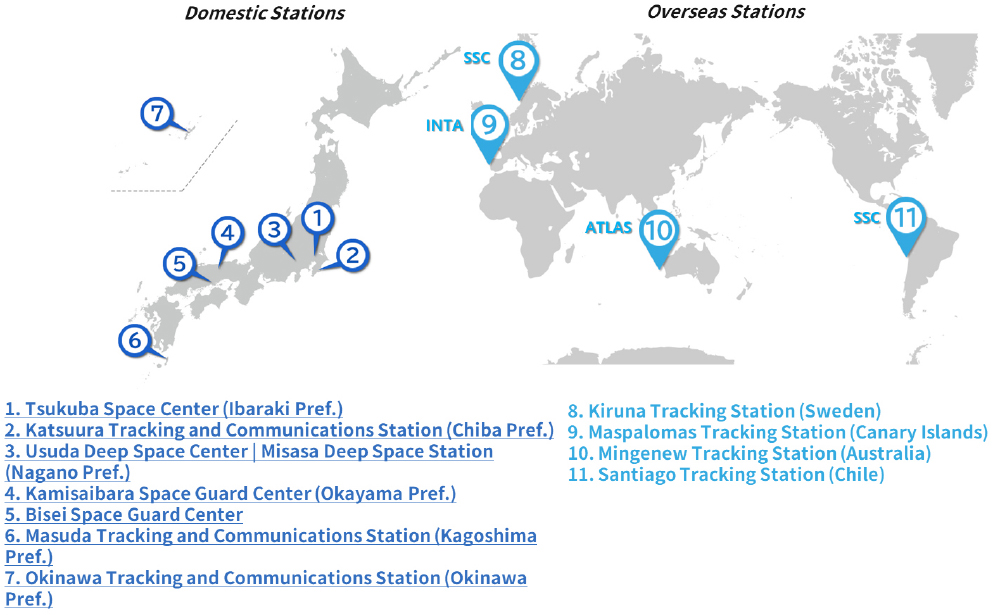
The Japan Aerospace Exploration Agency (JAXA) operates a network of seven domestic ground stations within Japan and four international ground stations outside Japan. The domestic stations are managed by local agencies, while the international stations rely on commercial ground station providers, including SSC, INTA (National Institute of Aerospace Technology, Spain), and ATLAS Space Operations. Fig. 4 presents a detailed overview of the locations and operational roles of JAXA's Tracking and Communications Stations [4].
2.5. South Korea KARI Ground Station Network
The Korea Aerospace Research Institute (KARI) operates the majority of South Korea's ground stations, with additional facilities managed by organizations such as the Korea Meteorological Administration and the Korea Astronomy and Space Science Institute.
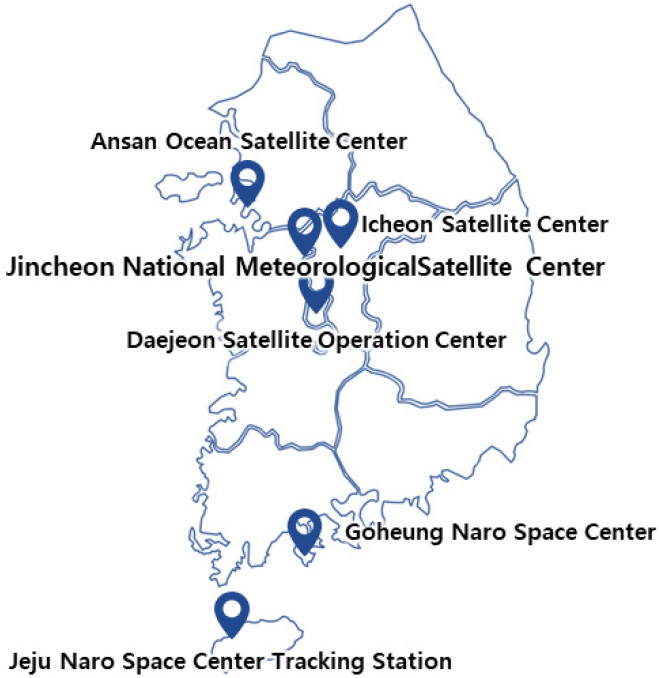
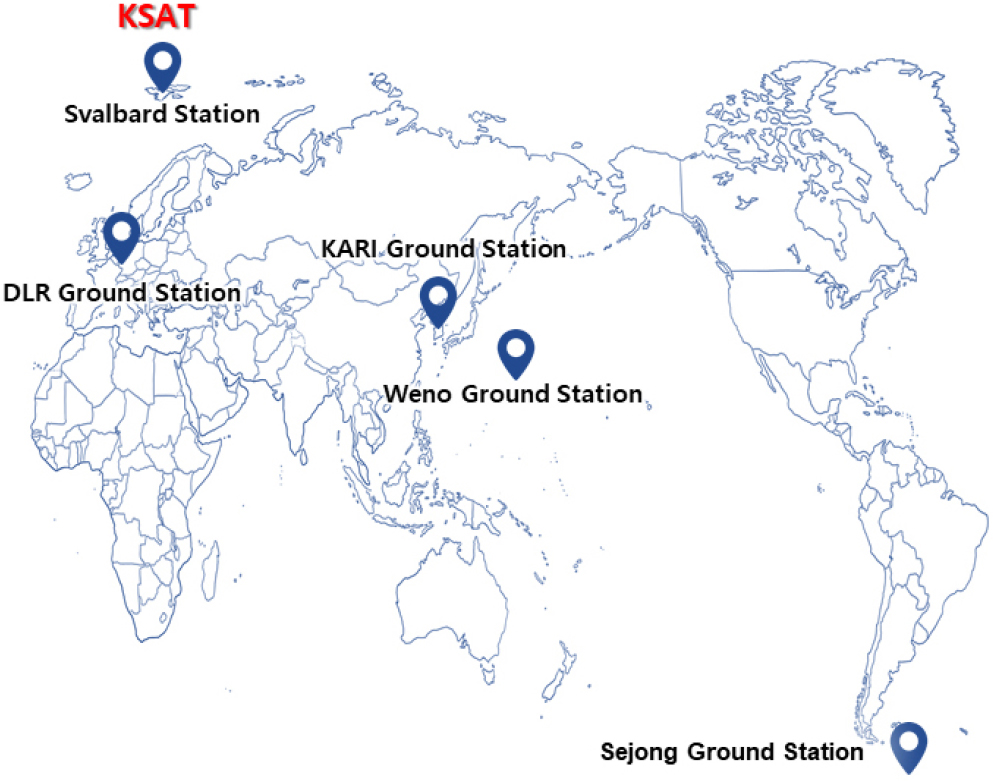
As illustrated in Fig. 5, domestic ground stations are located at the Daejeon Satellite Operation Center, Jeju Naro Space Center Tracking Station, Goheung Naro Space Center, Jincheon National Meteorological Satellite Center, Icheon Satellite Center, and Ansan Ocean Satellite Center. Additionally, as shown in Fig. 6, international ground stations supporting South Korean satellite operations are established in Antarctica, Micronesia, and Norway.
2.6. Domestic and International Commercial Ground Station Networks
2.6.1. KSAT (Kongsberg Satellite Service)
KSAT, a Norwegian company and a leading global provider of Ground Station as a Service (GSaaS), operates and develops a network of over 300 antennas across 28 locations, providing optimized connectivity for satellites in polar and inclined orbits. In June 2023, KSAT expanded its presence in South Korea by establishing a new ASP ground station on Jeju Island. The KSAT Ground Network consists of multiple service segments, including KSATMAX, KSATLITE, KSAT Launch & LEOP, KSAT Hosted, KSAT Lunar, and satellite operations. The KSATLITE service provides support for multiple frequency bands, including S-Band (Downlink: 2200-2290 MHz, Uplink: 2025-2120 MHz), X-Band (Downlink: 7750-8500 MHz), and Ka-Band (Downlink: 25.2-27.0 GHz), ensuring comprehensive coverage for various satellite communication applications [5].
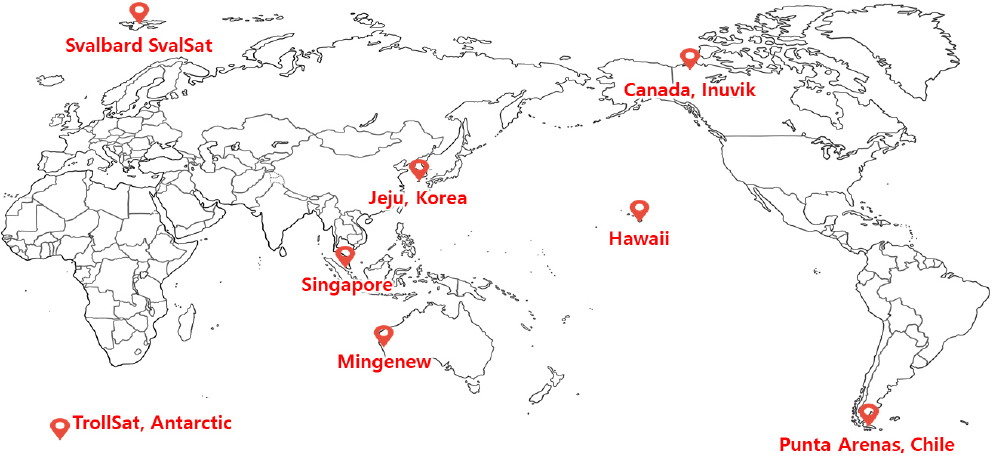
Table 2 presents an overview of KSAT’s capabilities and service offerings, while Fig. 7 illustrates the geographical distribution of KSAT's ground stations. The following section provides detailed information on KSAT's key ground station facilities.
TABLE 2.
KSAT Ground Station Company Overview
2.6.1.1. Svalbard Ground Station
The Svalbard Ground Station, operated by KSAT, is the northernmost satellite ground station, strategically positioned for polar orbit satellite control. It is directly linked to the TrollSat Ground Station in Antarctica, enabling two communication sessions per satellite orbit.
Svalbard is equipped with approximately 100 multi-mission and client-dedicated antennas, supporting multiple frequency bands, including C, L, S, X, and K-bands. To minimize frequency interference, the antennas are spaced 200 meters apart.
Major clients utilizing dedicated ground stations at Svalbard include EUMETSAT (European Organization for the Exploitation of Meteorological Satellites), NASA, ESA, and NOAA.
2.6.1.2. Troll Satellite Station (TrollSat)
The Troll Satellite Station (TrollSat), located in Queen Maud Land, Antarctica, is operated by KSAT and is accessible only during the summer season (mid-November to early March). TrollSat specializes in data transmission and reception for weather monitoring, climate research, and Earth observation services.
Like the Svalbard Ground Station, TrollSat is optimized for low Earth orbit (LEO) satellite operations, enabling two data downloads per orbit, with a maximum of 26 passes per day and a latency of only 40 minutes.
2.6.2. SSC (Swedish Space Corporation)
The Swedish Space Corporation (SSC) is a leading provider of Ground Station as a Service (GSaaS), offering satellite data transmission and reception, Launch and Early Orbit Phase (LEOP) support, satellite control, launch tracking, lunar exploration services, and ground station hosting. As presented in Table 3, SSC delivers comprehensive ground station solutions for missions spanning low Earth orbit (LEO) to geostationary orbit (GEO) [6].
TABLE 3.
SSC Ground Station Company Overview
SSC supports S/X-band and Ka/Ku-band frequencies and specializes in deep space mission operations, particularly for lunar exploration. Leveraging expertise gained from NASA’s Apollo program, SSC currently provides operational support for NASA’s Lunar Reconnaissance Orbiter (LRO) mission.
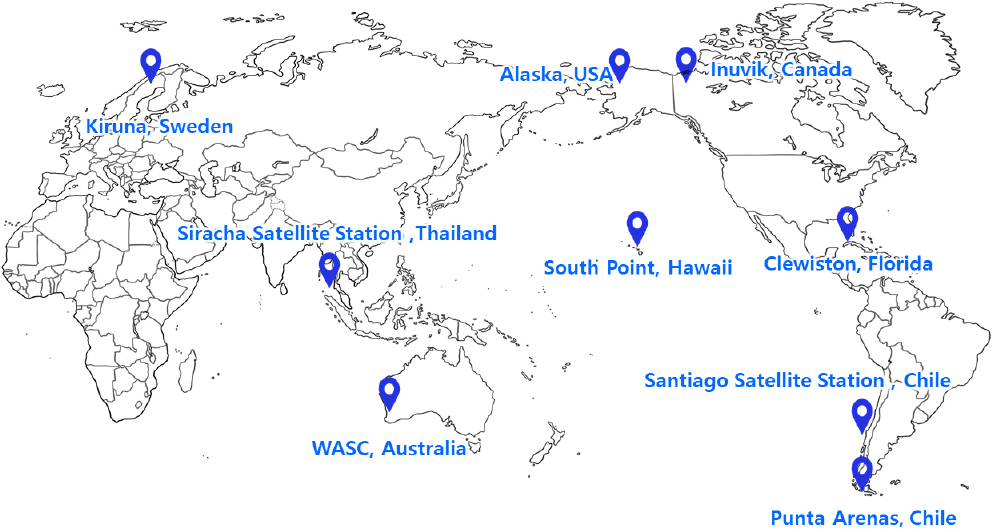
As shown in Fig. 8, the SSC ground station network comprises 21 sites and 28 antennas, benefiting from over 50 years of experience in managing and operating multiple ground station facilities. The company also operates a Network Management Center, ensuring continuous network monitoring and operational efficiency.
In addition to ground station services, SSC offers ground station hosting solutions, allowing customers to establish dedicated ground stations at SSC facilities. The company also provides antenna maintenance and emergency support services, ensuring operational reliability after installation.
2.6.2.1. Esrange Space Center Station (ESCS), Kiruna, Sweden
As illustrated in Fig. 9(a), the Esrange Space Center Station (ESCS) is situated above the Arctic Circle at 67°N latitude and 21°E longitude, approximately 40 km from Kiruna, Sweden. Its geographical location offers a significant advantage for tracking and communicating with polar-orbiting satellites.
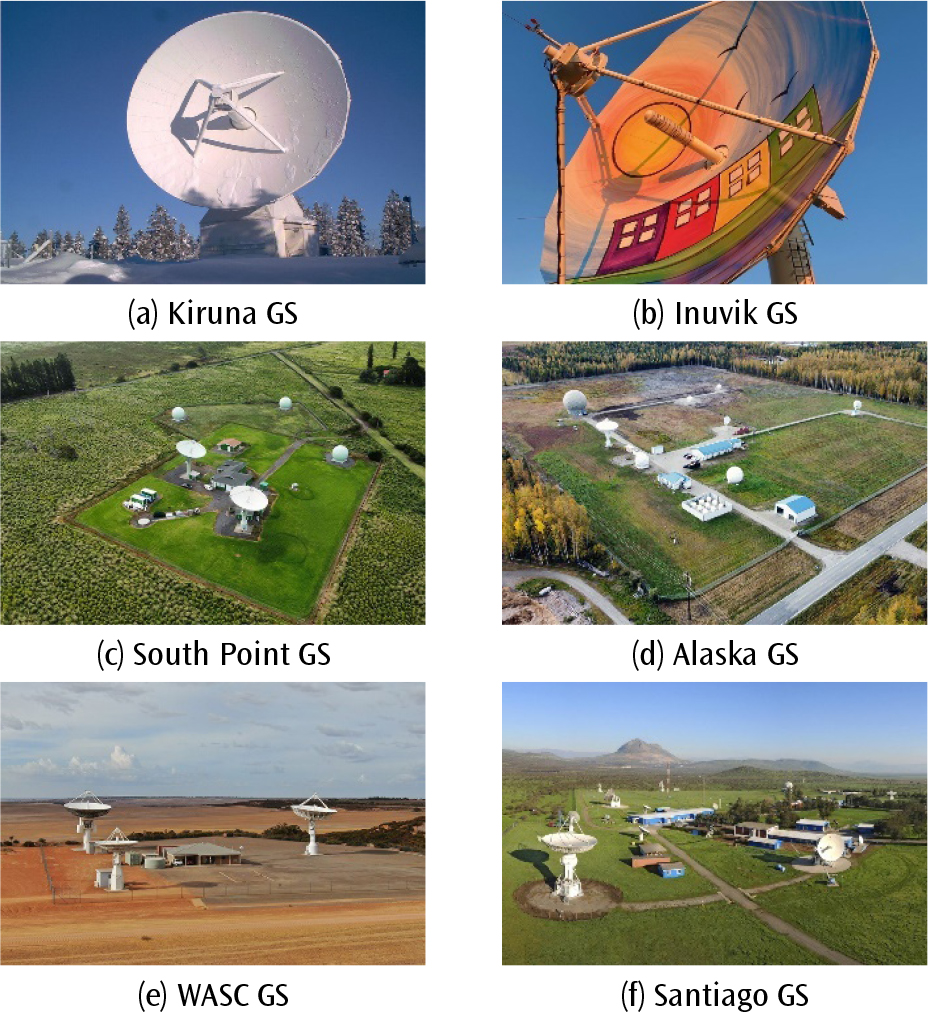
The Kiruna station specializes in data acquisition and processing for remote sensing and scientific missions. Additionally, it provides Tracking, Telemetry, and Command (TT&C) services, ensuring reliable communication and control for various satellite operations.
2.6.2.2. Inuvik Satellite Station, Canada
As shown in Fig. 9(b), the Inuvik Satellite Station, located above the Arctic Circle, benefits from its geographical position, which is particularly advantageous for tracking and communicating with polar-orbiting satellites. It serves as a key node in SSC's global ground station network, enabling the reception of data from all passes of polar-orbiting satellites.
The "Kinuvik" concept, which integrates the dual use of SSC ground stations in Inuvik and Kiruna (Esrange Space Center, Sweden), allows for continuous satellite contacts throughout all orbits. This operational synergy extends downlink durations, significantly increasing the volume of data that can be received from polar-orbiting satellites.
2.6.2.3. South Point Satellite Station, Hawaii, United States
Fig. 9(c) illustrates the South Point Satellite Station, which features two independent antennas capable of providing Telemetry, Tracking, and Command (TT&C) services, as well as data downlink operations. The ground station supports multiple frequency bands, including S-band (uplink and downlink), X-band (uplink and downlink), and Ku-band (uplink and downlink).
Located in the Pacific Ocean at 19° above the equator, this geographical position is particularly advantageous for accessing low-inclination orbiting satellites. The station is frequently utilized for geostationary orbit (GEO) raising operations and low Earth orbit (LEO) missions, supporting orbit raising and daily passes for polar and low-inclination orbiting satellites.
The South Point Satellite Station enhances SSC’s global ground station network by increasing contact opportunities for LEO missions, including polar orbits. Additionally, it plays a key role in the GEO orbit raising network, operating in conjunction with SSC stations in Santiago, Chile, and WASC in Western Australia.
2.6.2.4. North Pole Alaska Ground Station, United States
Fig. 9(d) illustrates SSC’s Alaska Ground Station, which is equipped with multiple independent antennas capable of providing Telemetry, Tracking, and Command (TT&C) services, as well as data downlink operations. The station supports various frequency bands, including S-band and X-band, and is strategically positioned for accessing high-inclination orbiting satellites.
This geographical location offers significant advantages for LEO missions, enabling orbit raising and daily passes for polar-orbiting satellites. Additionally, the Alaska Ground Station complements the Esrange Space Center in Kiruna, Sweden, by enhancing ground coverage and increasing contact opportunities for every polar orbit.
2.6.2.5. Western Australia Space Center (WASC), Australia
Fig. 9(e) illustrates the Western Australia Space Center (WASC) ground station, which is equipped with four full-motion antennas capable of supporting satellites, launch vehicles, and lunar exploration missions. The station provides Telemetry, Tracking, and Command (TT&C) services, as well as data reception capabilities.
These antenna systems operate across the S-band, X-band, and Ku-band frequency ranges, ensuring comprehensive mission support. Additionally, integrated with the SSC Punta Arenas Satellite Ground Station in Chile, WASC significantly enhances global coverage opportunities for polar-orbiting satellites.
2.6.2.6. Santiago Station, Chile
Fig. 9(f) illustrates the Santiago Station in Chile, which is equipped with three Telemetry, Tracking, and Command (TT&C) antennas operating on S-band uplink and downlink. All antennas are connected to a central operations building, which houses systems for reception, processing, recording, and monitoring.
The station operates under remote 24/7 control from the Network Management Center in Kiruna, Sweden. Additionally, the Santiago Station supports multiple frequency bands, including S-band, C-band, and Ka-band, ensuring comprehensive mission support.
2.6.3. Leaf Space
Leaf Space is an Italian company specializing in Ground Station as a Service (GSaaS). It provides Launch and Early Orbit Phase (LEOP) support, ground station hosting, and satellite operations, catering primarily to cluster satellite operators through its "Leaf Key" hosting service.
The company supports multiple frequency bands, including UHF, S-band, X-band, Ku-band, Ka-band, and Q/V-band, ensuring broad compatibility for diverse satellite missions. Additionally, its "Leaf Track Service" enables tracking and monitoring of launch vehicles and satellites.
With expertise in orbital insertion determination during launches and LEOP, Leaf Space utilizes antenna auto-tracking to enhance operational precision. Its ground station network consists of 13 sites and 17 antennas, handling over 10,000 passes per month and supporting more than 60 satellites [7].
The company is capable of executing passes for various orbits, including:
• Sun-synchronous orbit (SSO): 20 passes/day
• Mid-inclination orbit: 18 passes/day
• Equatorial orbit: 14 passes/day
2.6.4. RBC Signal
RBC Signal is a U.S.-based company specializing in Ground Station as a Service (GSaaS). It provides frequency licensing support, ground station engineering solutions, hosting services, and consulting for satellite operations. The company offers comprehensive services across all orbital regimes, including low Earth orbit (LEO) and geostationary orbit (GEO), supporting both sun-synchronous and mid-latitude orbits.
For LEO missions, RBC Signal provides uplink, downlink, and Telemetry, Tracking, and Command (TT&C) operations across a wide range of frequency bands, including UHF/VHF, L-band, S-band, C-band, X-band, Ku-band, Ka-band, and optical bands.
The company operates a global ground station network consisting of over 50 sites and more than 90 antennas, leveraging over 25 years of experience in ground station operations. Additionally, it offers ground station leasing and engineering solutions to support satellite communication infrastructure [8].
RBC Signal’s hosting services include ROSS (RBC Operations Support System), proprietary ground station services, and access to partner station networks. The company also provides support for ground station operations and maintenance, ensuring seamless and reliable service integration.
2.6.5. ATLAS Space Operation
ATLAS Space Operations is a U.S.-based company specializing in Ground Station as a Service (GSaaS) through a global alliance network. It provides Launch and Early Orbit Phase (LEOP) support and ground station hosting services, facilitating satellite communications and mission operations.
The company operates antennas ranging from 3.0 m to 11.3 m in diameter, primarily supporting S-band and X-band transmissions. Additionally, UHF frequencies are transmitted and received at ground stations in Washington, Japan, and Guam.
The ATLAS Ground Network consists of over 10 proprietary ground station sites and more than 20 partner ground stations, delivering GSaaS solutions through strategic alliances. The company’s proprietary software platform, FREEDOM, manages the global ground station network, ensuring efficient mission operations and seamless integration with satellite systems [9].
2.6.6. Infostellar
Infostellar is a Japan-based company specializing in Ground Station as a Service (GSaaS) for various space-based applications. It provides Launch and Early Orbit Phase (LEOP) support, ground station hosting services, and technical solutions, including ground station engineering and operations. The company supports frequency transmission and reception across VHF, UHF, S-band, X-band, and Ka-band [10].
Infostellar’s uplink and downlink communication services are supported by a global ground backbone, ensuring fast and efficient payload data delivery. Unlike traditional GSaaS providers, Infostellar does not operate its own ground stations but instead integrates and utilizes a global network of partner ground stations.
The Infostellar Ground Network comprises 26 S-band uplink/downlink ground stations, 25 X-band downlink ground stations, and 4 Ka-band downlink ground stations. This network structure ensures comprehensive global coverage, enabling reliable satellite communication across multiple frequency bands.
The company leverages its proprietary cloud-based ground station platform, StellaStation, for ground network management and mission operations. This platform provides seamless access to all ground station networks operated by Infostellar, facilitating global network integration. Additionally, the use of enterprise-grade cloud services enables cost-effective network infrastructure management and supports Starpass, further enhancing service efficiency.
2.6.7. CONTEC
Fig. 10 illustrates CONTEC, a South Korean company founded in January 2015, specializing in Ground Station as a Service (GSaaS). The company provides space ground station services, satellite image processing, Launch and Early Orbit Phase (LEOP) support, hosting services, and satellite operations. In collaboration with KSAT, CONTEC established a new ground station in Jeju, South Korea, in 2021. By 2024, it plans to expand its network by building 15 RF ground stations across 12 countries and three optical ground stations (OGS) in three countries.
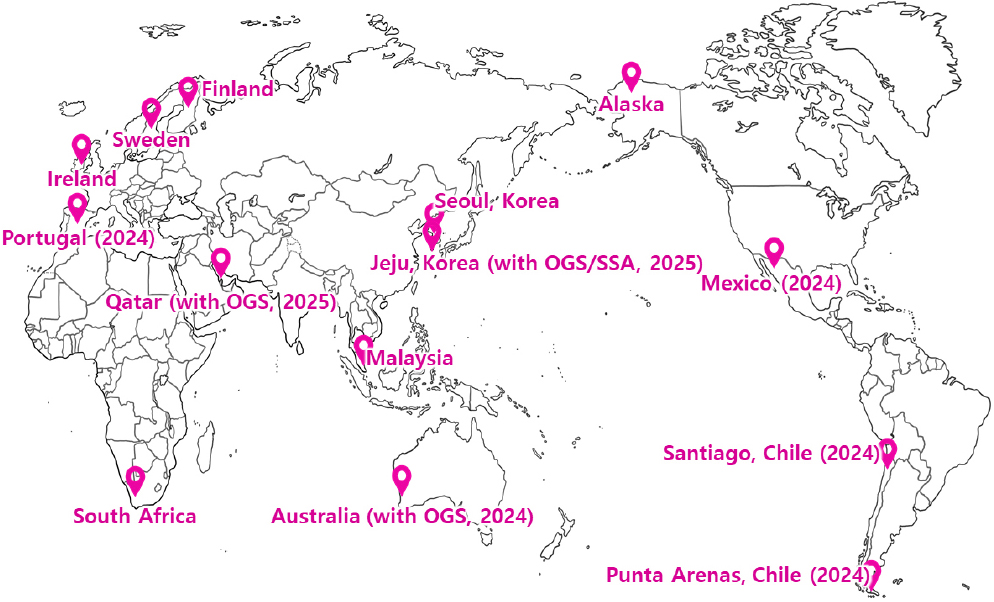
The CONTEC Ground Network currently consists of 12 ground stations and 15 antennas, including both small antennas (≤ 4 m) and large antennas (> 4 m). The company provides hardware and software hosting services, encompassing ground station design and integration, maintenance, repair, and operations (MRO) services, status monitoring and control, high-speed satellite image processing, satellite image calibration and validation (CAL/VAL), and small antenna manufacturing [11].
As summarized in Table 4, CONTEC provides comprehensive solutions that extend beyond ground station operations. Its expertise includes ground station system engineering solutions, GSaaS network solutions, data processing solutions for satellite image generation, and value-added satellite image utilization solutions. Additionally, CONTEC’s key technologies encompass space ground station design, construction, and operation, as well as ground station monitoring and control. The company also specializes in satellite image pre-processing and satellite image utilization service platforms, further strengthening its role as a comprehensive provider of satellite communication and data services.
TABLE 4.
CONTEC Ground Station Company Overview
3. COMMERCIAL GROUND STATION UTILIZATION STRATEGY
3.1. Comparison of Domestic and International Commercial Ground Station Service Providers
This study compares commercial ground station service providers based on the number of ground stations and antennas owned, the types of supported missions, hosting services, satellite operation capabilities, and the geographical distribution of ground stations, as illustrated in Fig. 11 and Table 5.
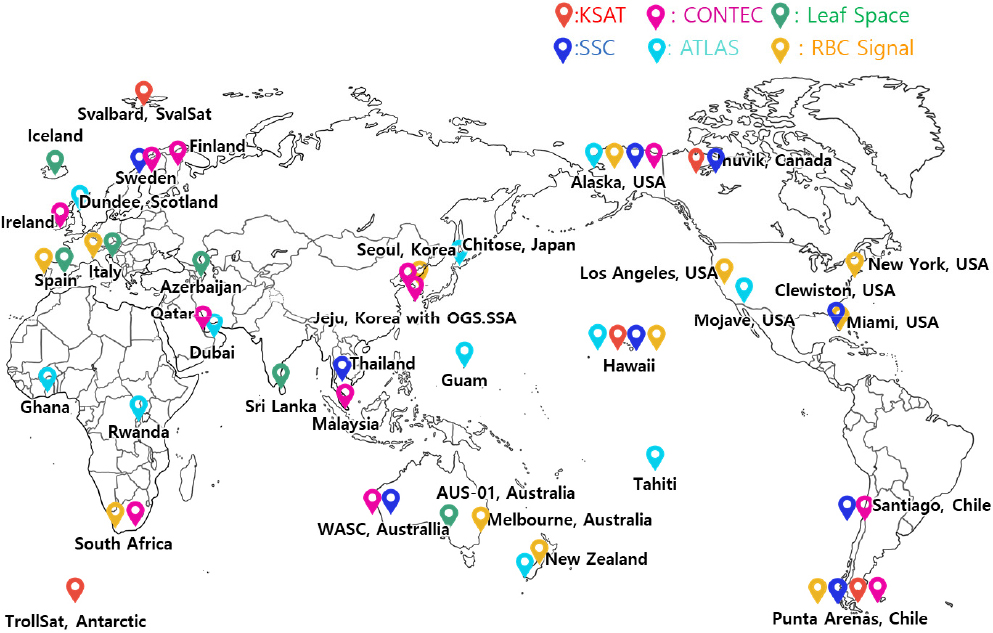
TABLE 5.
Comparison of Domestic and International Commercial Ground Station Services
The comparison of domestic and international providers highlights several key findings. RBC Signals operates the highest number of ground stations, while KSAT owns the largest number of antennas. European and U.S.-based companies account for more than 80% of the global ground station network, reflecting their dominance in the commercial ground station industry.
CONTEC, a South Korean commercial ground station provider, is continuously expanding its ground station operations and offers comprehensive downstream services, including satellite data transmission and reception, image processing, ground station installation, and maintenance, repair, and operations (MRO). Additionally, CONTEC directly operates satellites, positioning itself as a key domestic player in national security satellite operations. Given its growing infrastructure and operational capabilities, CONTEC is expected to play an increasingly vital role in supporting national and commercial satellite missions.
3.2. Operational Efficiency of Domestic and International Commercial Ground Stations
In South Korea, satellite operations are primarily concentrated at the Jeju ground station, creating operational challenges, particularly for low Earth orbit (LEO) satellites. These satellites require frequent and rapid data transmission as they pass through various orbital paths, including polar and inclined orbits. Reliance on a single ground station can significantly reduce the efficiency and stability of communication links, limiting data reception windows and overall operational flexibility.
To enhance operational efficiency, establishing a global ground station network and deploying ground stations in key overseas locations is essential. A distributed network alleviates the burden of satellite data reception and operations, enabling seamless data acquisition as satellites pass over different regions. For instance, strategically positioning ground stations along equatorial, inclined, and polar orbits maximizes communication opportunities and ensures optimal contact time with satellites at various points in their orbit. This global coverage improves data continuity, reduces latency, and enhances overall satellite mission efficiency.
3.2.1. Utilization Strategies for Geostationary Satellite Ground Stations
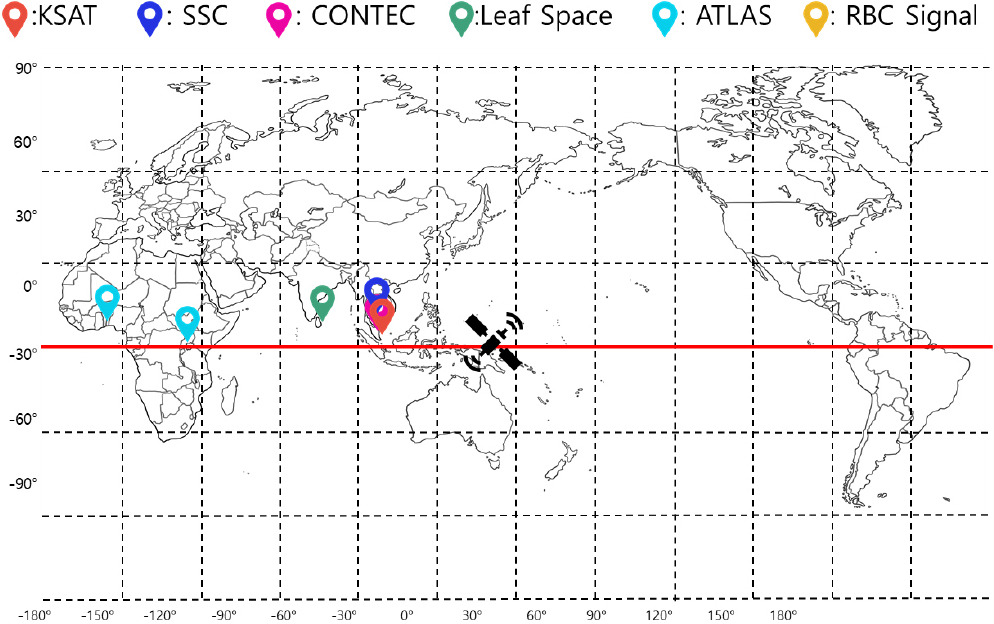
A geostationary orbit (GEO) is positioned at an altitude of approximately 36,000 km above the Earth's equator with an inclination angle of 0°, meaning it has no inclination. Satellites in this orbit rotate at the same angular velocity as the Earth, enabling continuous observation of a fixed location. However, geostationary satellites cannot be positioned outside low-latitude regions, making signal transmission to high-latitude areas challenging. Domestically operated satellites in this orbit include the Cheollian satellite series (e.g., Cheollian-1, Cheollian-2A).
As illustrated in Fig. 12, commercial ground stations suitable for geostationary satellites include KSAT’s station in Singapore, SSC’s station in Thailand, ATLAS’s stations in Ghana and Rwanda, Leaf Space’s station in Sri Lanka, and CONTEC’s station in Malaysia. These locations provide optimal coverage for geostationary satellite operations, ensuring stable and continuous communication links in low-latitude regions.
3.2.2. Utilization Strategies for Inclined Orbit Satellite Ground Stations
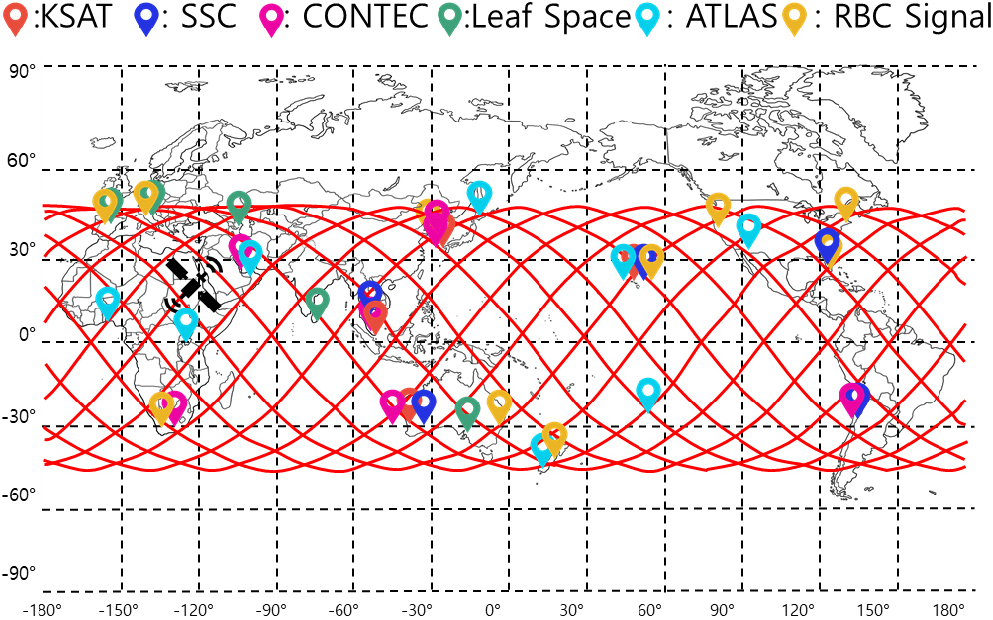
Inclined orbits represent a category of geosynchronous orbits that possess an inclination angle. Due to the characteristics of inclined orbit satellites, ground stations positioned within 50° latitude are required for effective communication. These orbits are commonly utilized for communication satellites, and in South Korea, the Mugunghwa-1 satellite previously operated in an inclined orbit.
Expanding ground station infrastructure significantly improves communication frequency and reduces data latency. Operating a minimum of 10 overseas ground stations enables up to 48 communication sessions per day, effectively reducing the average revisit time from 206 minutes to 21 minutes. In contrast, reliance on domestic ground stations alone limits revisit opportunities to six times per day, creating potential data transmission delays.
As illustrated in Fig. 13, commercial ground station locations suitable for inclined orbit satellites include KSAT's stations in Hawaii and Australia, SSC’s stations in Hawaii, Australia, and Santiago, and Leaf Space’s stations in Spain, Italy, and Australia. CONTEC’s stations include Seoul, Jeju, WASC (Western Australia Space Center), and Santiago, providing additional flexibility for mission planning and satellite operations.
3.2.3. Utilization Strategies for Sun-Synchronous Orbit (SSO, Polar Orbit) Satellite Ground Stations
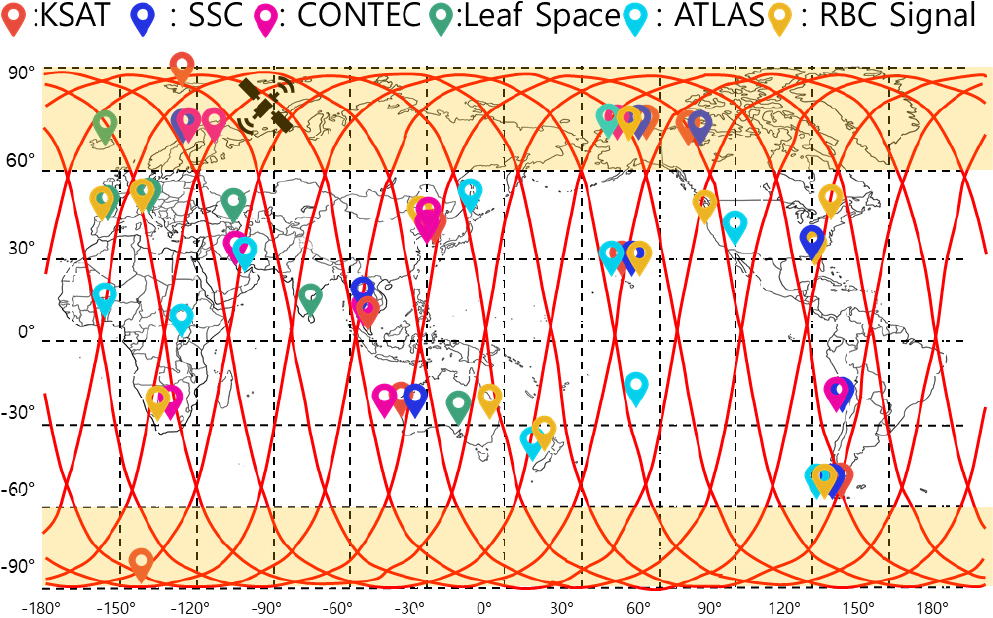
A sun-synchronous orbit (SSO) is a near-polar orbit that forms a 90° angle with the equator, allowing satellites to pass over the North and South Poles while maintaining a consistent local solar time. This orbit is ideal for Earth observation and reconnaissance satellites, as it enables global coverage with consistent lighting conditions. Due to the nature of polar orbit satellites, all overseas ground stations can be effectively utilized, providing enhanced data acquisition capabilities.
Expanding the ground station network plays a crucial role in improving satellite data availability. Operating a minimum of 13 overseas ground stations enables 47-48 communication sessions per day, reducing the average revisit time from 361 minutes to 21 minutes. This significantly enhances data transmission efficiency and ensures continuous satellite monitoring.
As illustrated in Fig. 14, commercial ground station locations suitable for polar orbit satellites include KSAT’s Svalbard, Inuvik, Punta Arenas, Alaska, and TrollSat ground stations. SSC’s locations include Alaska, Inuvik, Punta Arenas, and Kiruna ground stations, while CONTEC’s locations include Kiruna, Finland, and Alaska ground stations. These facilities provide global coverage, allowing seamless satellite tracking and data acquisition across all latitudes.
4. Space Security Measures for Utilizing Commercial Ground Stations
4.1. The Necessity of Establishing Cybersecurity Measures for Space Systems
According to Japanese data, over 90 cybersecurity incidents occurred in the space sector within and outside Japan between 1986 and 2022. Additionally, NASA reported more than 6,000 cyberattacks, including phishing attempts and malware intrusions, between 2017 and 2020. A summary of these space system cybersecurity incidents is presented in Table 6[12].
TABLE 6.
Cybersecurity Incident Cases in Space Systems [12]
In leading spacefaring nations such as the United States, discussions on cybersecurity measures for space systems are actively progressing at both governmental and private-sector levels, reflecting the growing recognition of cyber threats in space operations.
In South Korea, security measures and management regulations for space systems are outlined in policies such as the “Security Management Regulations for Space Development Projects.” However, compared to advanced spacefaring nations, the technical framework and regulatory depth remain relatively insufficient, highlighting the need for enhanced cybersecurity policies, advanced threat mitigation strategies, and a more comprehensive regulatory framework.
4.2. Trends in Satellite-Ground Station Data and Network Security Technologies
4.2.1. Telemetry Communication Security Technologies
A telemetry system is a communication technology used in the development of unmanned vehicles, satellite launch vehicles, and aircraft. It consists of an onboard telemetry device, which collects and transmits sensor and status signals, processes image data, and relays information to ground stations, and ground-based inspection equipment, which receives, processes, and analyzes transmitted data. This system is essential for collecting and monitoring flight data to ensure real-time performance assessment and mission success [13,14].
4.2.1.1. Upper Layer Security Technologies [13]
The upper-layer security technologies for satellite communication networks share fundamental principles with terrestrial communication networks. These technologies are designed to ensure that transmitted data remains confidential and unaltered, allowing access only to authorized users. Key security mechanisms include packet encryption to protect data confidentiality, message integrity verification to prevent unauthorized modifications, and authentication protocols to confirm the identities of the sender and receiver.
4.2.1.2. Physical Layer Security Technologies [13]
The primary objective of physical layer security technologies in satellite communication networks is anti-jamming, which mitigates signal interference and enhances the resilience of satellite navigation receivers. This ensures that devices operate as intended, even in the presence of deliberate interference. Essential anti-jamming techniques include frequency hopping, spread spectrum, error correction codes (ECC), and agile/narrow multiple-beam technology, all of which contribute to signal robustness and survivability
4.2.1.3. Telemetry System Encryption Method using the ARIA Cryptographic Algorithm [14]
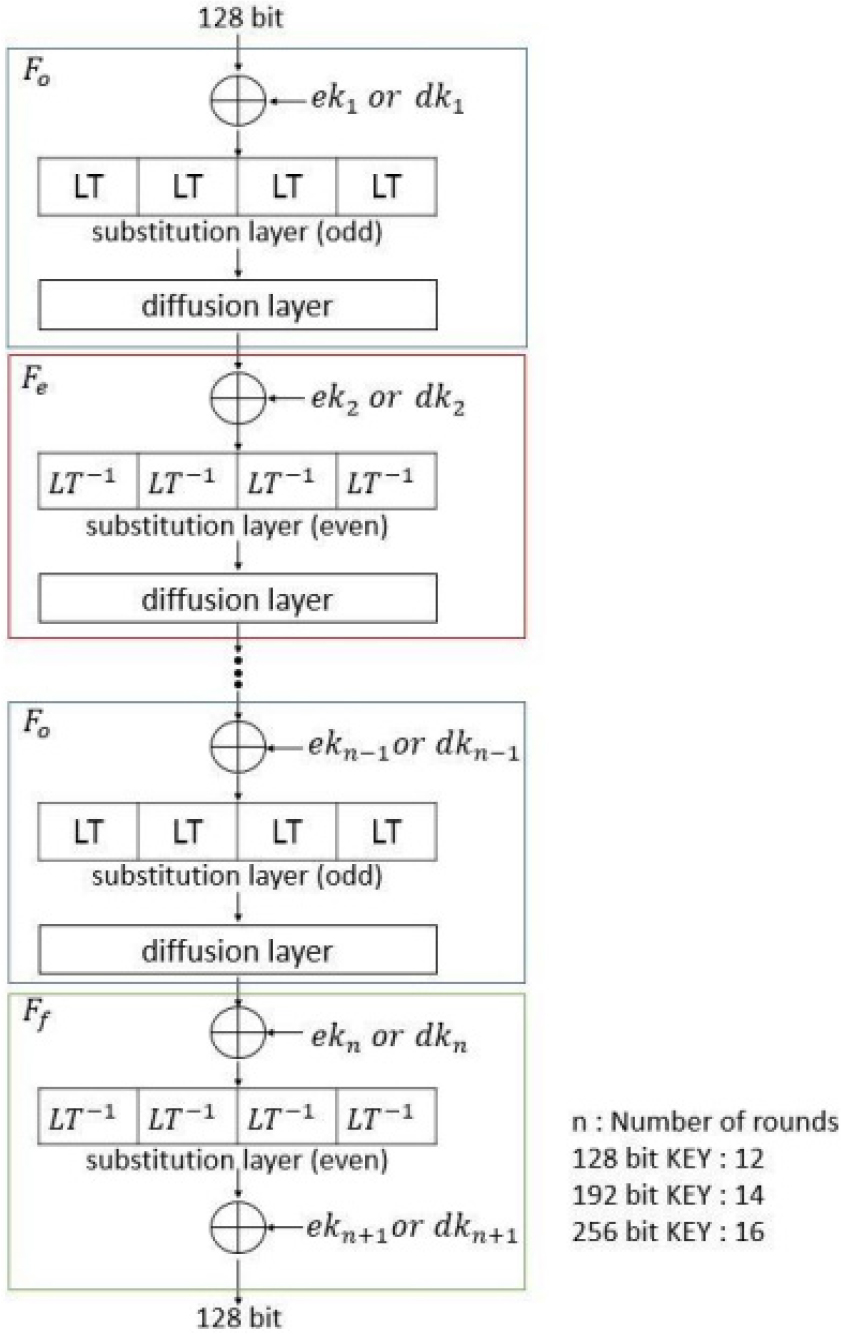
Telemetry systems require real-time data processing at predefined intervals, necessitating an encryption approach that minimizes processing bottlenecks and is suitable for high-speed hardware environments. Symmetric key encryption is the preferred method, with widely used algorithms including the Advanced Encryption Standard (AES), the Korean national standard block cipher ARIA (Academy, Research Institute, Agency), and the Lightweight Encryption Algorithm (LEA).
The ARIA algorithm, as illustrated in Fig. 15, demonstrates performance comparable to AES in hardware implementations. Unlike traditional block cipher algorithms, ARIA utilizes a 16 × 16 binary matrix structure, enhancing its security characteristics. Established as a Korean national standard, ARIA is widely applied across various fields. It operates as a symmetric-key block cipher with an involution Substitution-Permutation Network (SPN) structure, supporting a 128-bit block size with key sizes of 128, 192, and 256 bits. Among these, ARIA-256 provides the highest security level, employing a 256-bit encryption key and 16 encryption rounds
4.2.2. System Security Technologies
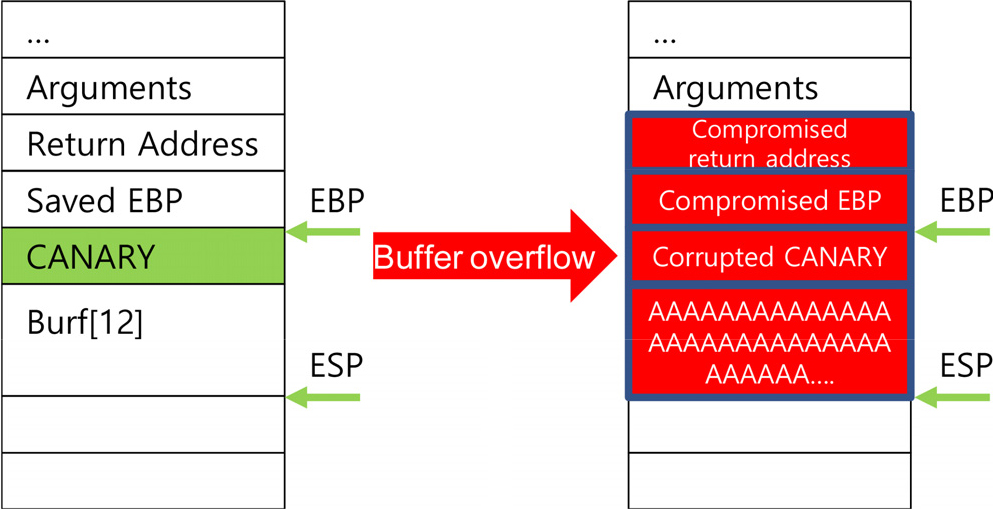
System security vulnerabilities, such as buffer overflow attacks, occur when a program attempts to store more data in a buffer than it is designed to handle. Attackers can exploit these vulnerabilities to overwrite system memory, execute malicious code, or gain unauthorized access to system resources. To mitigate these risks, several protection mechanisms have been developed, including Data Execution Prevention (DEP), Stack Canary, and Address Space Layout Randomization (ASLR). These techniques play a critical role in enhancing software stability and overall system security.
4.2.2.1. DEP (Data Execution Prevention) [15,16]
Data Execution Prevention (DEP) is a security mechanism that restricts execution rights in memory, preventing unauthorized code execution. By setting the No-eXecute (NX) bit, DEP blocks the execution of malicious code in non-executable memory regions, reducing the risk of exploitation. In operating systems such as Windows, DEP ensures that only memory designated for code execution is permitted to run executable instructions, thereby mitigating buffer overflow and code injection attacks.
4.2.2.2. Stack Canary [17]
Stack Canary is a buffer overflow protection mechanism implemented through StackGuard. As illustrated in Fig. 16, a Canary Word is inserted into the stack frame immediately after the function’s return address. Since most buffer overflow attacks occur when an adjacent buffer overflows, this method leverages the principle that any modification to the return address would also alter the Canary Word. If a discrepancy is detected, the system identifies a potential attack and terminates execution, preventing further exploitation.
4.2.2.3. Address Space Layout Randomization (ASLR) [18]
Address Space Layout Randomization (ASLR) is a security technique that randomizes memory addresses allocated to a program each time it executes. By dynamically altering memory locations, ASLR prevents attackers from reliably predicting the positions of critical system components, such as executable code, stack, and heap memory. This method significantly reduces the effectiveness of return-oriented programming (ROP) and buffer overflow exploits. ASLR achieves this by either introducing variable-sized spaces at the beginning of memory segments or rearranging memory sections dynamically during execution, enhancing overall system resilience against memory-based attacks.
4.2.3. Satellite Communication Network Security [19]
4.2.3.1. Components of Satellite Communication Networks
A satellite communication network consists of several core components, including the Satellite Control Center (SCC), Network Control Center (NCC), Satellite Communication System, host computers for processing satellite communication data, satellite communication data storage devices, and satellite communication terminals. In addition to these primary elements, wireless and wired network environments may also be integrated to facilitate data transmission and communication.
4.2.3.2. Classification of Security Levels in Satellite Communication Networks
Security levels in satellite communication networks can be classified based on the network architecture and the sensitivity of transmitted data. As outlined in Table 7, satellite communication security is categorized into four distinct levels: Level-0, Level-1, Level-2, and Ground Network. This classification framework allows for a systematic assessment of security vulnerabilities and the implementation of appropriate protective measures to safeguard satellite communication integrity and confidentiality.
TABLE 7.
Four Levels of Satellite Communication Network Security Classification.
4.2.3.3. Analysis of Security Threat Elements in Satellite Communication Networks
Once a satellite is launched, direct human access for security management is no longer possible, necessitating the use of remote command transmission for controlling the satellite’s operational status, attitude, and positioning. This reliance on remote communication introduces inherent security risks, particularly the potential exposure of control signals that regulate satellite movement, performance, and operational functions. Unauthorized interception or manipulation of these signals could lead to malicious alterations in satellite trajectory, performance degradation, or operational disruptions, highlighting the critical need for robust authentication mechanisms to secure control commands.
To ensure secure satellite operations, authentication methods must verify whether received command signals originate from authorized users with valid credentials. Additionally, it is essential to safeguard not only the integrity of control signals but also the information they transmit to prevent eavesdropping, replay attacks, and unauthorized modifications. Implementing strong encryption protocols and secure authentication techniques is crucial for preventing unauthorized entities from issuing commands that could compromise satellite functionality.
Beyond cybersecurity threats, satellites are also vulnerable to signal interference, unauthorized access, and data manipulation across various communication channels, including satellite radio signals, control signals, application data, and ground network communications. Additional security risks stem from human errors, such as operator misconfigurations or incorrect command executions, as well as physical and environmental factors, including solar radiation, space weather disturbances, and potential physical damage from space debris. Addressing these diverse security challenges requires a comprehensive and multi-layered defense strategy incorporating advanced authentication measures, encryption protocols, signal integrity verification, and operational safeguards to ensure the secure and reliable operation of satellite communication networks.
4.3. Security Countermeasures for Utilizing Commercial Ground Stations in Domestic Security Satellite Operations
4.3.1. Space and Cyber Threats
4.3.1.1. Space Security and Key Protection Elements
Global space agencies, including the European Space Agency (ESA), design and operate space missions primarily for peaceful purposes, with security and safety being critical considerations. Given the sensitivity of space missions, robust security measures are essential to protect both assets and data. These security elements can be categorized into terrestrial and space-specific domains [20].
Terrestrial security measures encompass disaster management, critical infrastructure protection, transportation and logistics, energy security, agriculture and water resource management, and surveillance across various domains (aerospace, maritime, terrestrial, and space).
Space-specific security measures include space situational awareness, monitoring of near-Earth objects, space weather forecasting, and satellite tracking.
4.3.1.2. Threats and Countermeasures
To ensure the security of space missions, a systematic risk analysis methodology must be employed to identify threats and develop appropriate countermeasures. The European Space Agency (ESA) outlines a four-stage risk assessment methodology to evaluate mission vulnerabilities and enhance security measures [20].
Stage 1
•Define the context of the analysis through cyber threat analysis
•Define and model the space mission
Stage 2
•Identify and assess vulnerabilities to identify potential existing vulnerabilities in space mission assets
•Define basic threat scenarios
Stage 3
•Identify and assess risks by evaluating the identified vulnerabilities and related threats
•Create an attack tree based on the space mission architecture
Stage 4
•Address the threats defined in the previous stages
•Define necessary actions to manage the risks
•Develop recommendations and mitigation plans
Security incidents in space missions can result in severe consequences, including mission failure, economic loss, human casualties, and data loss or leakage. Therefore, effective countermeasures must be implemented, and continuous efforts should be made to minimize potential risks.
4.3.1.3. End-to-End Cybersecurity
To ensure the protection of all systems and data related to space missions, security must be addressed comprehensively across all components and operational stages. A robust cybersecurity framework should encompass multiple layers of defense to mitigate potential risks effectively [20].
Key security elements include physical security, which safeguards mission-critical infrastructure from unauthorized access and external threats, and personnel security, which involves access controls, background checks, and training to prevent insider threats. Additionally, information protection is essential to maintaining data confidentiality and integrity through encryption and secure communication channels. Lastly, information assurance focuses on ensuring data availability, authenticity, and resilience against cyber threats through advanced authentication and real-time monitoring.
By integrating these security measures across all phases of a mission, space systems can be better protected against both cyber and physical threats.
4.3.1.4. CCSDS Space Security Framework
In the field of space security, the Consultative Committee for Space Data Systems (CCSDS) defines security management targets as encompassing ground systems, space systems, and communication systems. A fundamental aspect of security management is the identification of threats and risks, where risk is defined as the potential for a specific threat to exploit a particular vulnerability, thereby negatively impacting an information system. A threat, in this context, refers to any potential cause of an incident that could compromise the integrity, availability, or functionality of a system or organization.
The CCSDS space security framework consists of three primary phases: planning and evaluation, design, and implementation. During the planning and evaluation phase, the framework provides security threat analysis for space missions, security connection guidelines for system integration, and security recommendations for mission planners. The identified security threats in space missions are categorized based on their impact on different mission segments, including the space segment, user segment, control segment, and system/network segment, as illustrated in Fig. 17[12].
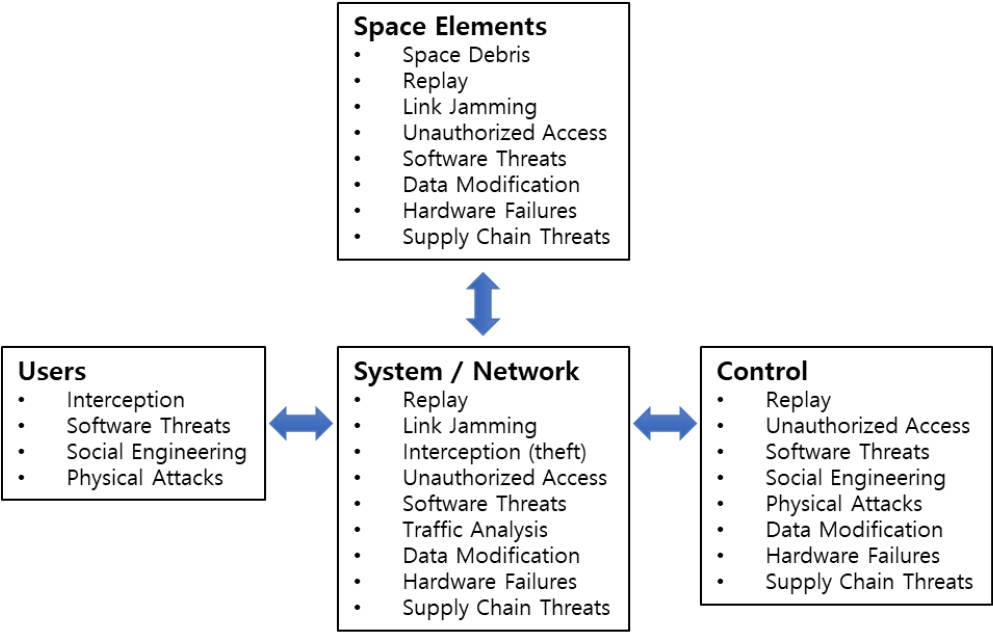
Furthermore, CCSDS classifies potential threats based on four key factors: hostile elements, internal factors, environmental factors, and structural factors. Hostile elements include external actors such as terrorists, foreign intelligence agencies, and hackers. Internal factors refer to risks stemming from disgruntled employees, negligence, or operational errors. Environmental factors encompass natural and artificial disasters, pandemics, space weather disturbances, and space debris. Structural factors involve failures in software, hardware, or system architecture. By analyzing these risks and their likelihood, CCSDS provides security mechanisms and mitigation strategies tailored to each category, enhancing the resilience of space missions against a broad spectrum of threats.
4.3.1.5. NIST Information Security Management System
The National Institute of Standards and Technology (NIST) Information Security Management System is a framework widely used by the U.S. federal government to establish and maintain cybersecurity standards. Developed under the Federal Information Security Management Act (FISMA), NIST provides guidelines and best practices to ensure the security of government information systems. A key component of this framework is the Risk Management Framework (RMF), which consists of a structured seven-step process for managing security and privacy risks, as illustrated in Fig. 18[20].
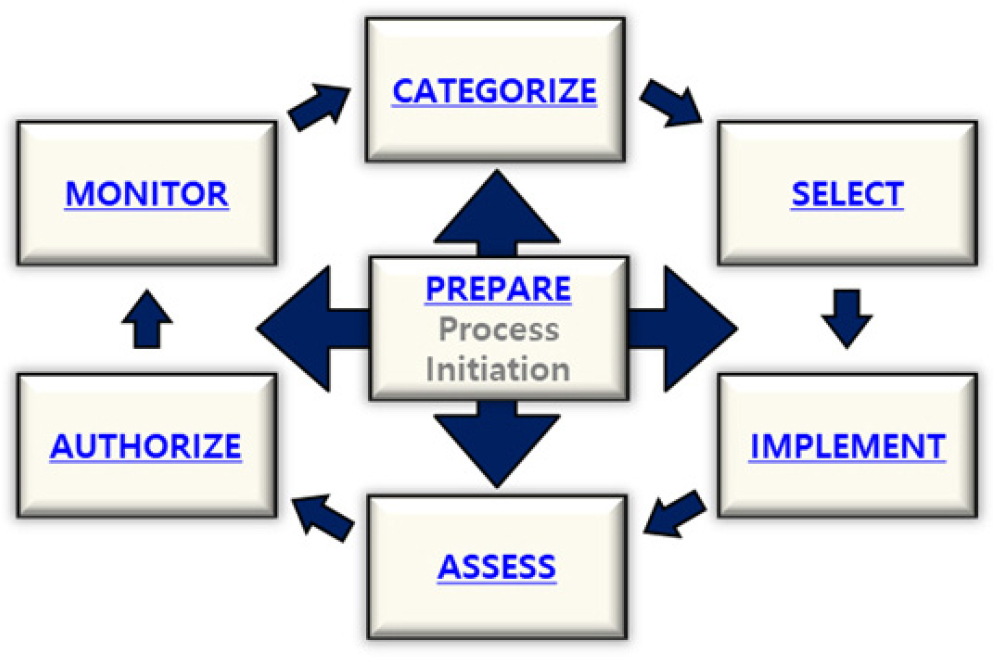
The RMF process begins with the Prepare stage, where organizations conduct preliminary activities to assess and manage security and privacy risks. Next, in the Categorize stage, systems and information are classified based on impact analysis, considering how data is processed, stored, and transmitted. The Select stage follows, where appropriate security controls are chosen based on a risk assessment to mitigate potential threats. These controls are then applied in the Implement stage, where deployment methods are documented to ensure proper integration into the system.
Once implemented, the security controls undergo evaluation in the Assess stage to determine whether they function as intended and achieve the desired security outcomes. Based on this assessment, the Authorize stage involves risk-based decision-making, where administrators evaluate security risks and determine whether to authorize the system for operational use. Finally, the Monitor stage ensures continuous oversight of security risks, allowing for proactive threat detection and necessary updates to the security posture.
4.3.1.6. Japan’s Cybersecurity Guidelines for Commercial Space Systems [12]
In March 2024, Japan’s Ministry of Economy, Trade and Industry (METI) released the Cybersecurity Guidelines for Commercial Space Systems ver. 2.0, aimed at mitigating business risks—such as financial losses or bankruptcy caused by cyberattacks—while fostering the growth of the commercial space industry. The guidelines outline potential cybersecurity risks associated with space systems and provide essential security measures, relevant references, and existing policies for industry stakeholders. The document emphasizes the need for private sector operators to take proactive steps in enhancing cybersecurity resilience.
The guidelines introduce a standard model for commercial space systems (Fig. 19) and define 13 risk scenarios anticipated within this framework. Security measures are categorized into “common countermeasures,” which apply to all organizations involved in space systems, and “space system-specific countermeasures,” which are tailored to each subsystem. These measures serve as a reference for stakeholders to assess and strengthen their cybersecurity posture. For each countermeasure, the guidelines provide specific recommended actions and responses to ensure compliance with security requirements.
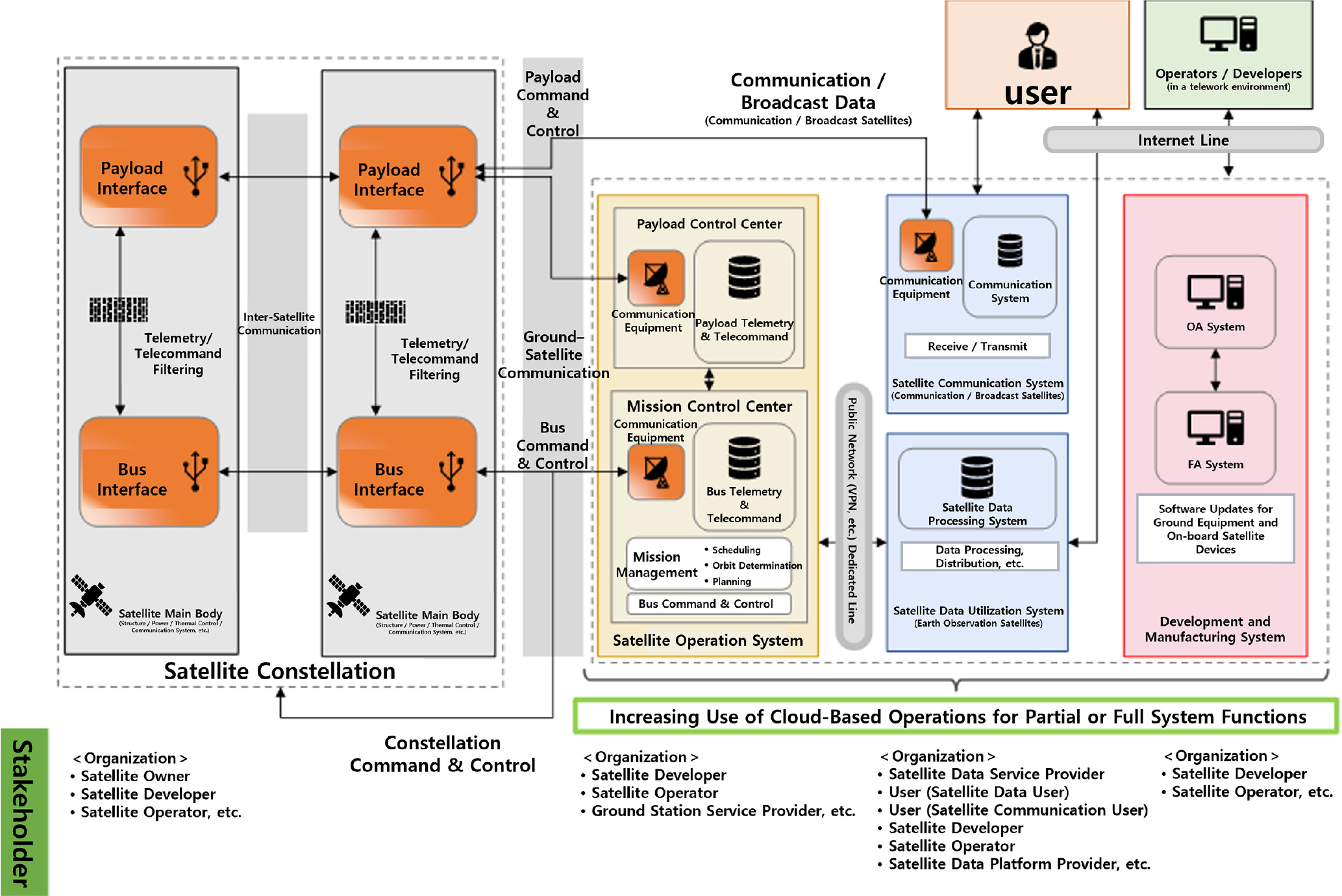
Additionally, the document classifies cybersecurity measures for various satellite operation facilities, including tracking and control stations, reception stations, network operations systems, and mission control systems (encompassing both satellite control and orbit control systems). These measures are systematically examined and categorized to enhance security across all operational domains within the commercial space industry.
4.3.1.7. South Korea’s Space Development Project Security Management Regulations [21]
The Space Development Project Security Management Regulations, established by South Korea’s Ministry of Science and ICT, provide a framework for ensuring the security and safe management of sensitive information associated with space development projects. These regulations define the responsibilities and procedures for information security, outlining specific measures to protect critical data related to national security.
The guidelines apply to all organizations involved in space development projects, specifying protocols for handling, storing, and transmitting sensitive information. By enforcing strict security controls, the regulations aim to mitigate risks such as unauthorized access, data breaches, and potential cyber threats targeting national space assets. Additionally, they establish a structured approach to security management, ensuring compliance with national policies and reinforcing the overall resilience of South Korea’s space development initiatives.
4.3.2. Comparative Analysis of Domestic and International Cases and Proposed Countermeasures
South Korea has established various space security regulations, with the Space Development Project Security Management Regulations serving as a key framework for securing satellites and satellite facilities. This section provides a comparative analysis of South Korea’s Space Development Project Security Management Regulations and Japan’s Cybersecurity Guidelines for Commercial Space Systems, using fundamental security principles as the basis for evaluation. Based on this analysis, recommendations for enhancing South Korea’s space security framework are proposed.
The principles of security (confidentiality, integrity, availability, authentication, and non-repudiation) are essential concepts in cybersecurity, as outlined in sources such as Introduction to Information and Communication in the Fourth Industrial Revolution and the Handbook of Space Security. Both South Korea and Japan have developed security regulations that incorporate these principles to varying degrees.
Japan’s Cybersecurity Guidelines for Commercial Space Systems provide a comprehensive security framework that includes both common security measures applicable to all space systems and specific security measures tailored to satellites and satellite operations facilities. In contrast, South Korea’s Space Development Project Security Management Regulations primarily focus on protecting sensitive information from physical threats and establishing security responsibilities and fundamental principles. However, they lack detailed provisions for communication security and data protection within space systems.
Given these findings, there is a clear need for South Korea to establish more specific regulations and guidelines for satellite systems and satellite ground stations, ensuring a more robust cybersecurity framework that aligns with international best practices.
5. CONCLUSION
This study examines the current state of domestic and international commercial ground station services and proposes utilization strategies for integrating commercial ground stations into security satellite operations. Additionally, it analyzes the security and safety considerations associated with commercial ground station usage and outlines necessary security measures for the operation of security satellites.
With the advent of the New Space era, the global landscape of space technology development has shifted from a government-led model to a private sector-driven industry, accelerating competition and fostering new business models and services. As a result, major space-faring nations are increasingly investing in space development, leading to rapid growth in satellite deployment and operations. South Korea also aims to expand its satellite capabilities, including small-scale cluster satellites and mission-specific satellites, necessitating a strategic approach to securing domestic and international ground station infrastructure. Furthermore, the operation of security satellites requires robust security and safety measures to counter threats such as electronic attacks, GPS jamming, cyberattacks, and hostile interference.
To address these challenges, this study analyzed the current state of commercial ground station services and examined the operational frameworks and infrastructure development efforts of national space agencies. The capabilities and service characteristics of domestic and international commercial ground station providers were also evaluated. To establish effective strategies for utilizing commercial ground stations in security satellite operations, a comparative analysis was conducted to assess the strengths and weaknesses of domestic and international service providers. Based on this assessment, utilization strategies were proposed, considering different satellite operational orbits. Additionally, to ensure the secure use of commercial ground stations, this study examined space security and safety elements, investigated trends in space security platforms, and derived ground station security management measures based on international case studies.
The findings of this study, specifically, the analysis of domestic and international commercial ground station characteristics, their advantages and limitations, and utilization strategies based on satellite operational orbits, can serve as a valuable reference for selecting and employing commercial ground stations in national security satellite operations. Moreover, the comparative analysis of space security elements and international security platform trends provides critical insights for developing security management measures to enhance the resilience of commercial ground stations in the operation of national security satellites.